When a cultural moment becomes big enough, brands will always find a way to step inside—and lately, nothing has pulled them deeper into the Upside Down than the return of Stranger Things.
What makes this wave particularly exciting from a UX and creative-tech standpoint:
Every single one of these ads was generated or heavily enhanced through AI.
Some campaigns were built with OpenAI models, others with Google Gemini 3 / Nano Banana, and all of them show how fast visual storytelling is evolving.
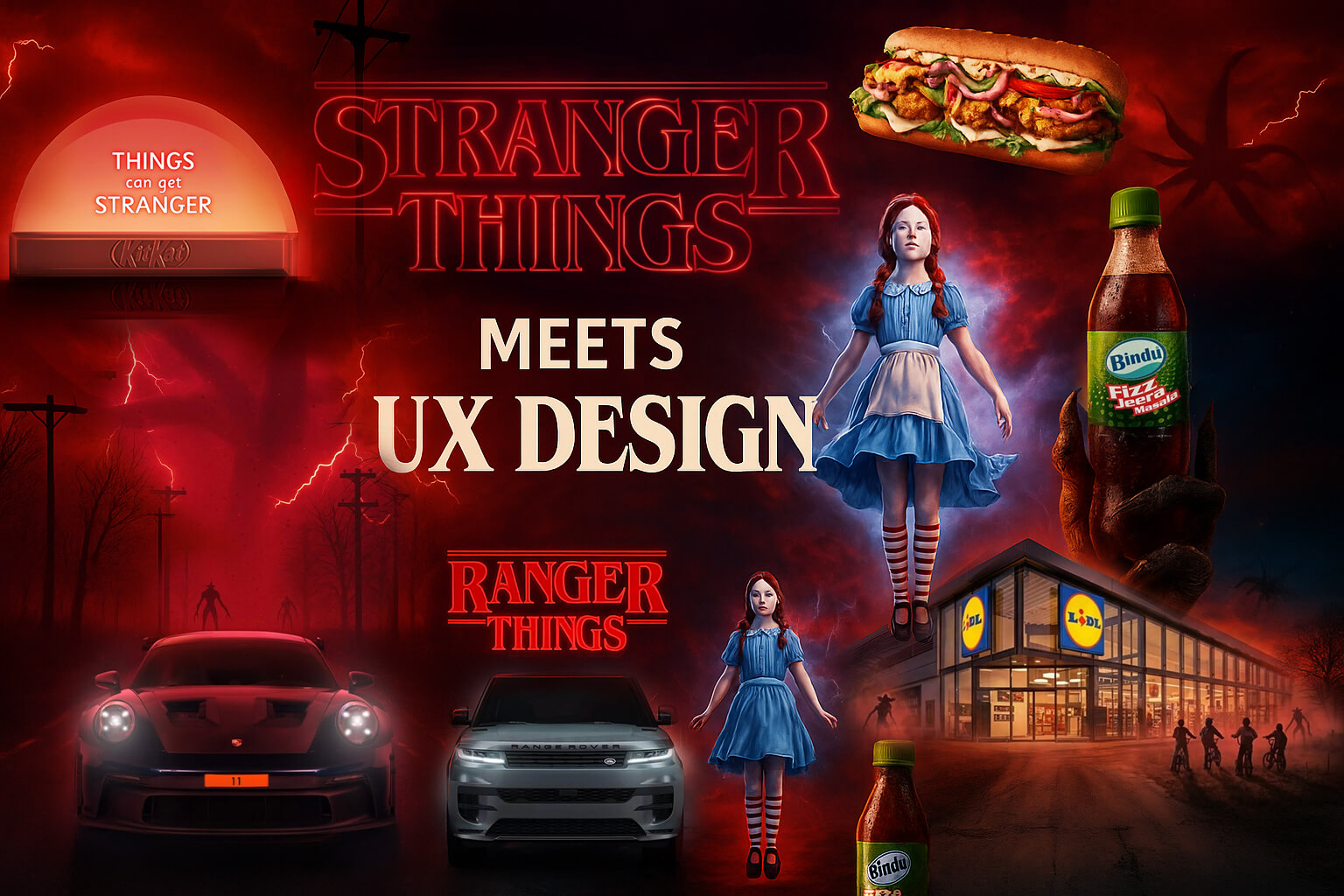
On this page, I’m showcasing ten brand campaigns—Porsche, Burger King, Subway, KitKat, EDEKA, Lidl, Wendy’s and others—who turned the Stranger Things universe into high-impact marketing moments.
The real story is what this trend tells us about UX, creativity, and the future of brand communication.
1. Instant Recognition: Design That Stops the Scroll
The Stranger Things aesthetic is now a universal visual language: red-black contrast, lightning cracks, tentacles, floating particles, upside-down reflections.
These visuals instantly activate a user’s mental model—people recognize the world before they understand the message.

© Porsche
A premium brand like Porsche using Upside-Down iconography shows how strong the visual signature has become.
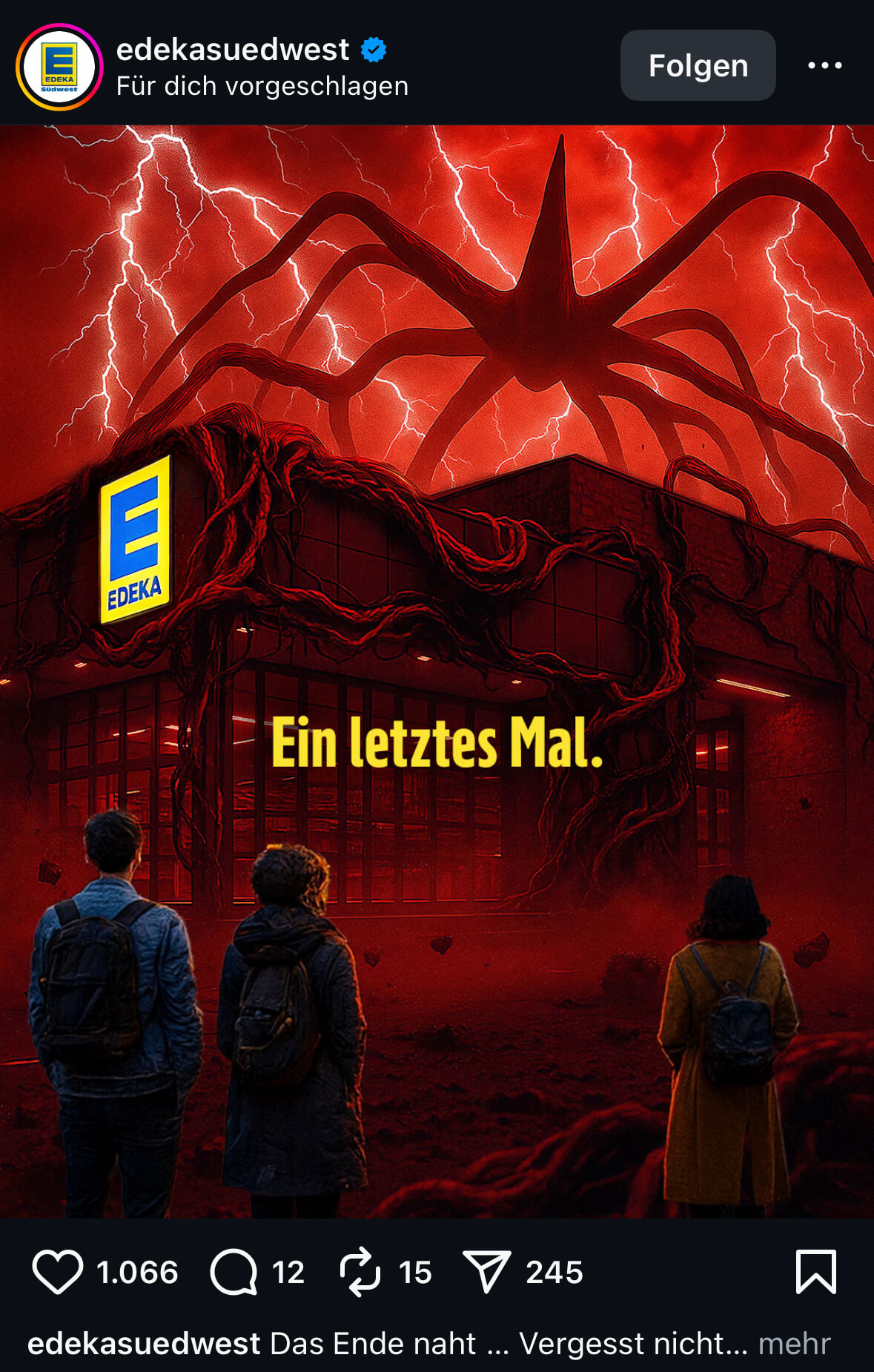
© Edeka
A grocery store transformed into Hawkins-level chaos? Instant recognition. Instant emotion.
2. Emotional Familiarity: Borrowed Atmosphere = Borrowed Feelings
Stranger Things carries nostalgia, mystery, retro sci-fi tension, and emotional storytelling.
Brands tapping into this universe borrow that emotional weight—without having to build it from scratch.
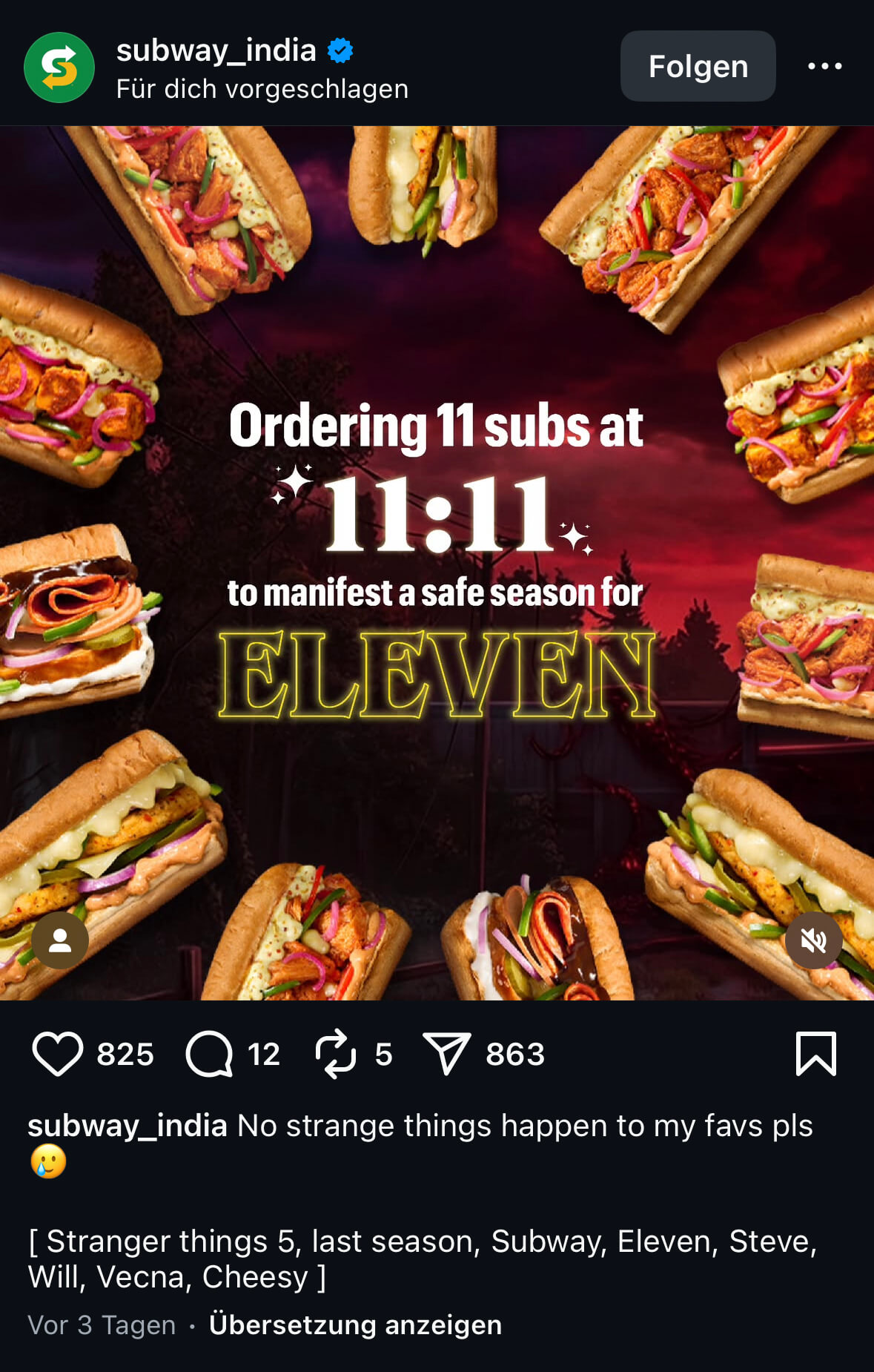
© Subway
Even a sandwich becomes emotionally charged through association with the series‘ atmosphere.

© Wendy’s
A fast-food mascot turned into a cinematic hero—this is emotional UX in its purest form.
3. Contextual Playfulness: Making the Upside Down Fun
The best examples don’t only recreate the Stranger Things look—they remix it with humor, wordplay, and contextual creativity.
This creates micro-delight: small moments that increase engagement and reward recognition.
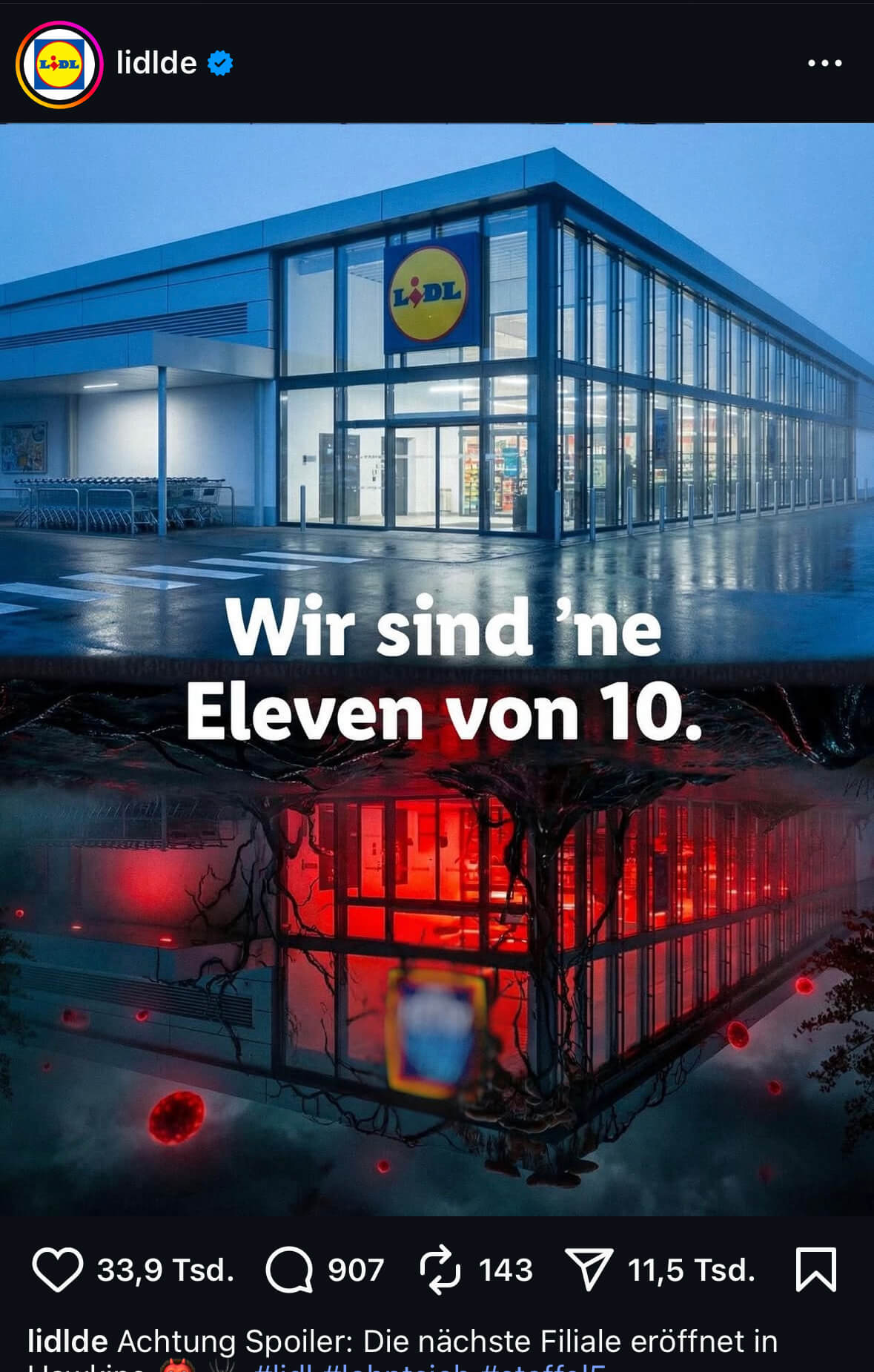
© Lidl
Wordplay meets dual-world imagery. UX meets cultural remix.
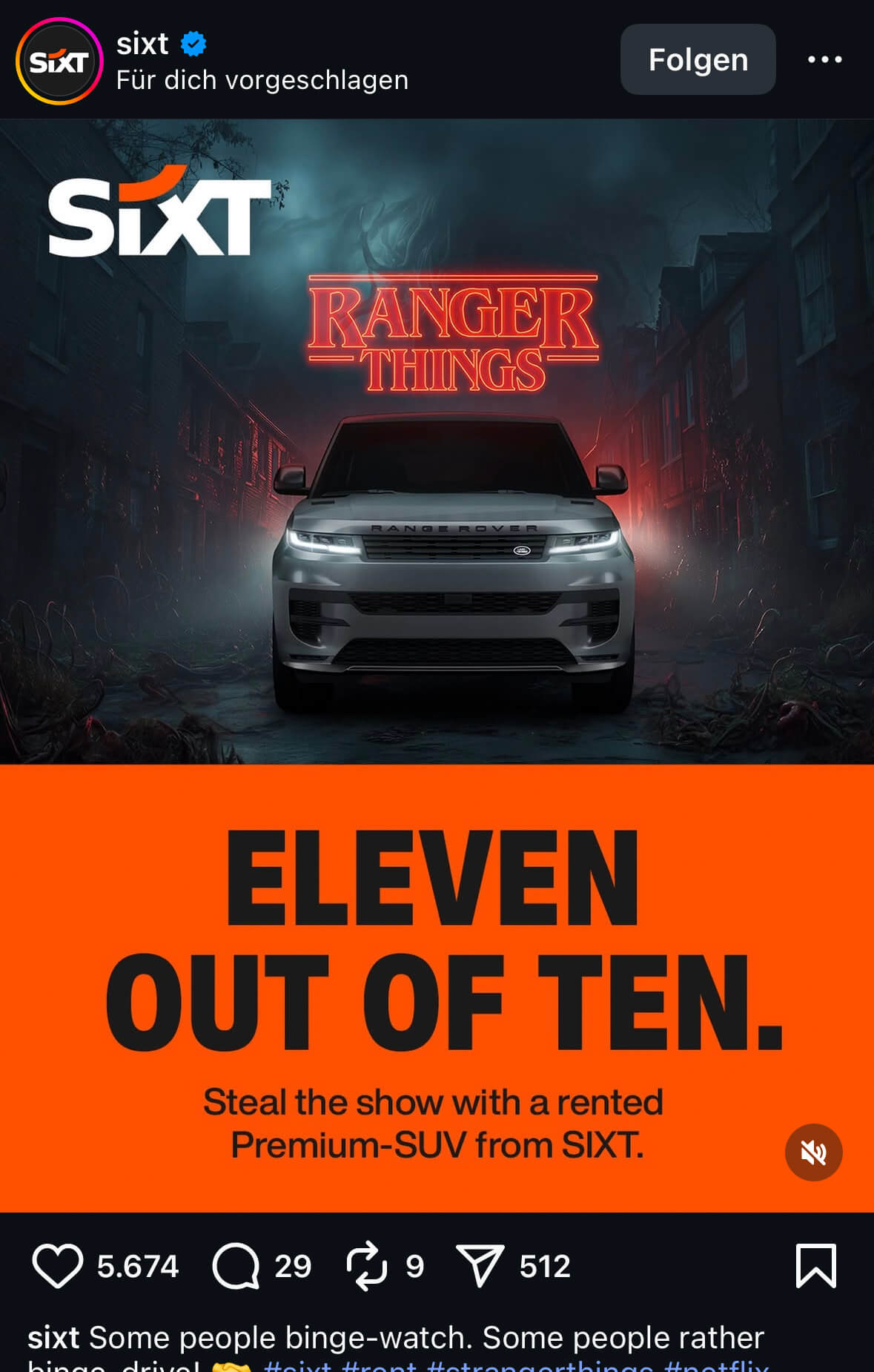
© Sixt
Contextual humor transformed into a visual narrative. A perfect example of playful UX.
4. AI as the Creative Engine: Cinematic Storytelling at Scale
These campaigns would have required full photo shoots and large budgets in the past.
Now, brands can generate cinematic environments, product integrations, lighting variations, and refined compositions in minutes.

© Burger King
Dual-world product design—previously expensive, now achievable through smart prompting and AI pipelines.
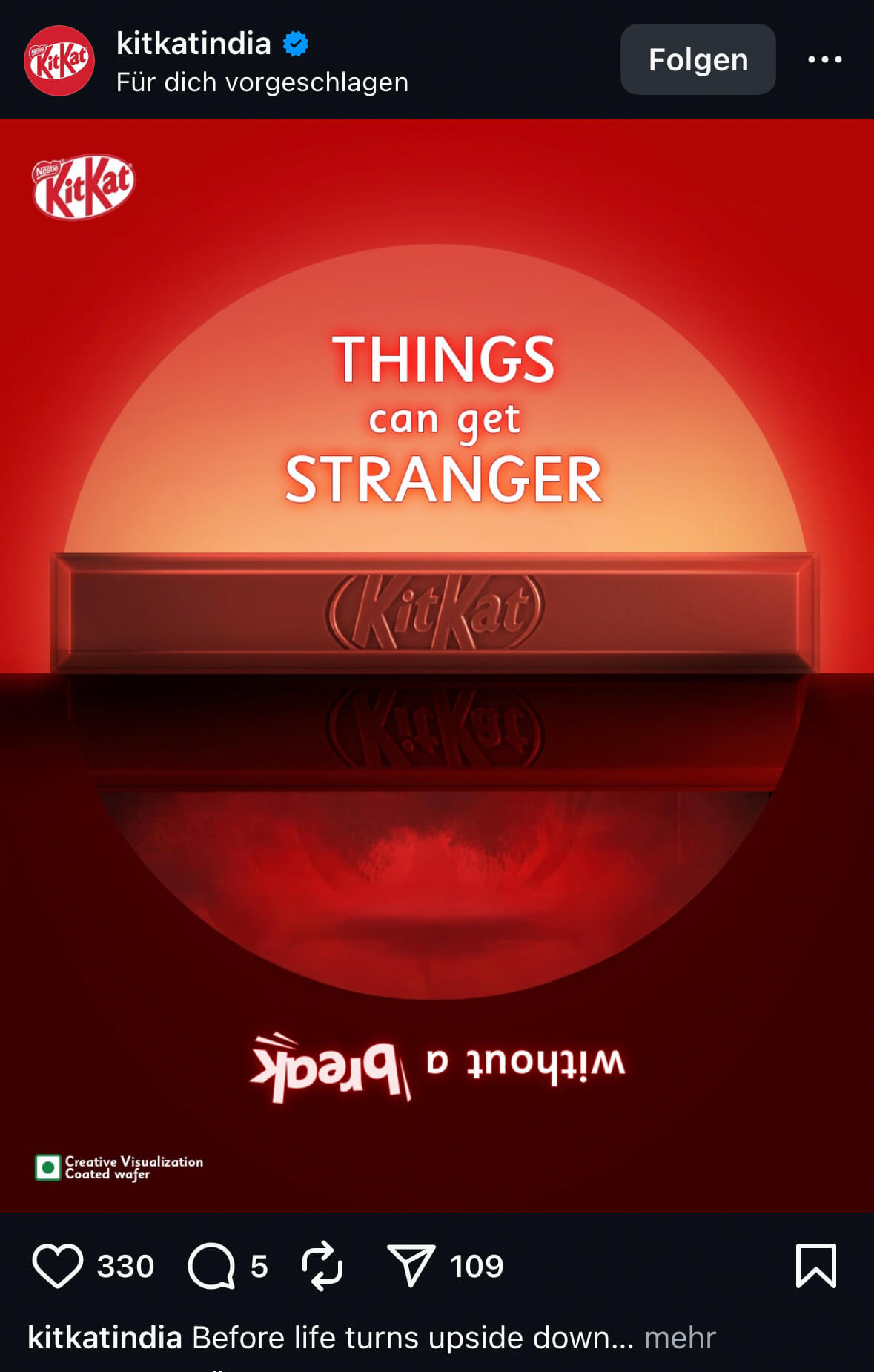
© KitKat
Minimalist, atmospheric, and a great example of AI-generated lighting and reflection work.
5. Worldbuilding as UX: Brands Creating Mini Universes
We’re entering an era where brands don’t just post content—they build micro-worlds.
Visual atmospheres and narratives become part of the user experience.

© Lidl
This looks more like a Netflix poster than an ad—this is worldbuilding as a design strategy.

© Bindu Fizz
A dark, creature-feature twist that shows how flexible and bold AI-driven visual identity can be.
Why This Trend Elevates UX Thinking
These campaigns reveal a clear evolution in how brands communicate:
01
Culture as a Design System
Brands no longer speak in isolated visuals — they borrow and remix cultural aesthetics. Stranger Things shows how a shared visual language can instantly create recognition and emotional context.
02
AI as a Creative Multiplier
AI doesn’t replace creativity. It accelerates it. Teams can now produce cinematic worlds, variations, and refinements in minutes instead of weeks.
03
Speed as a UX Advantage
Trends move fast. Brands that react quickly feel present and culturally relevant. AI-enabled workflows make timing part of the user experience.
04
Visual Storytelling as the Interface
Modern audiences expect immersive imagery, not static communication. Cinematic, AI-powered visuals have become a new layer of interaction — a way users connect with a brand on an emotional level.